Many people get caught up in the idea of obtaining links to their website, doing keyword research, and optimising content, but they forget about the value of internal linking. Internal linking is often treated as an optional task, which it certainly isn’t if you plan on improving your search engine ranking. Instead of relying solely on getting external links for a boost in rankings, take a close look at improving the internal linking on your website, because internal links are an essential part of any effective SEO strategy.
What Are Internal Links, and Why Do I Need Them?
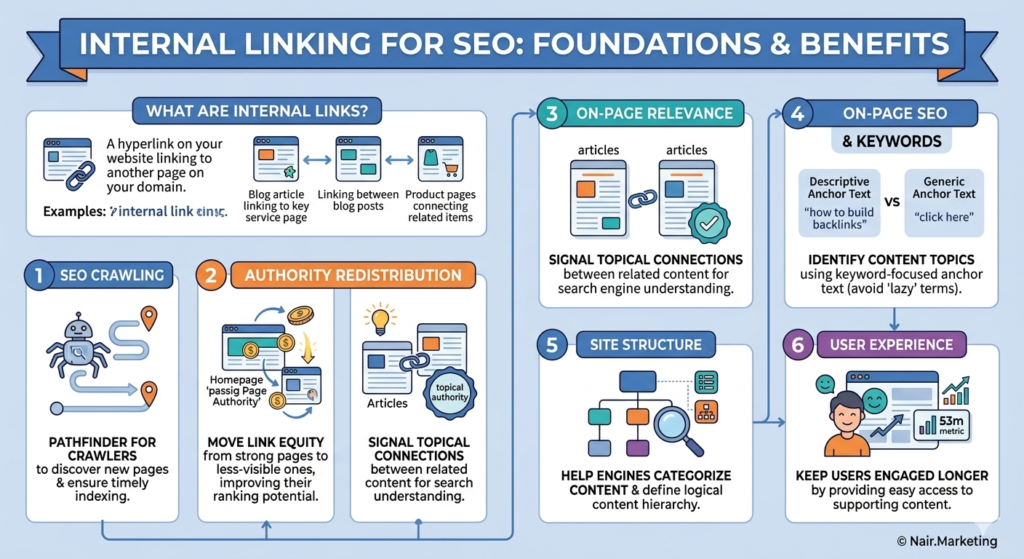
An internal link refers to any hyperlink on your website which links to another page on your domain. Think about how users will naturally interact with your content and guide them through your site with clear, relevant and easy to find internal links. These could range from a link within your article to one of your key service pages, linking between blog posts, relating product pages together or directing traffic from category pages to supporting resources.
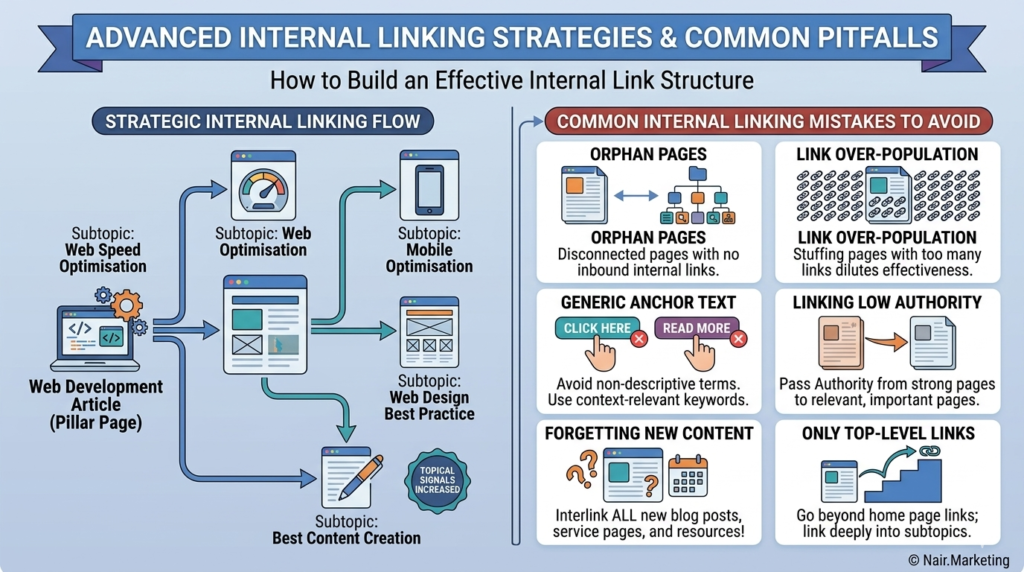
For example, if you have written a blog post on the importance of proper web development, you can link internal resources on such topics as: “website speed optimisation”, “mobile optimisation”, “web design best practice” and “best content creation for web” and other related articles and pages on your website, which would naturally support and add value for your audience while supporting the search terms and phrases on these additional pages.
Why is Internal Linking So Important to Your Website’s SEO Ranking?
1. SEO Crawling
Search engines crawl through your website by following the links you provide them. By using internal links, you create a path for the crawlers to discover new pages, ensure that new content is discovered promptly and that it gets properly indexed, and help ensure that crawlable page depth is increased. The structure of your internal links affects how much the search engines are able to crawl and understand.
You wouldn’t expect search engines to be able to discover everything if pages are sitting disconnected in silos throughout your website, so don’t ignore this critical SEO opportunity!
2. Website authority redistribution
This is a hugely understated aspect of internal linking that most websites completely ignore. Page Authority (PA) was one of the initial ways that search engines would evaluate and measure the strength of a particular page and its ranking capabilities. Over time, Page Authority has become part of the broader link equity or page authority that is passed through a website’s linking structure. You don’t want to hoard Page Authority only for your homepage and core service pages. By using internal linking effectively to pass the strength of your strongest pages through to your more important, and yet potentially less authority-building pages, you improve their ability to rank and gain visibility within the search engine results.
3. On-Page relevance
Internal links can improve on-page relevance and assist in signalling topical connections between different pages on your website. By linking an article about email marketing to another article about ‘how to grow your email list,’ both pages gain added topical authority in the minds of the search engine. It’s a clear indicator that the two pieces of content are related and could therefore benefit from ranking together. This is even enhanced by the anchor text of your internal links.
4. On-Page SEO and keyword focus
Search engines use anchor text to identify the content of a destination page. This means that if you are linking to an article about building backlinks, it is essential that you utilise an anchor text like “how to build backlinks” or “tips for backlink building.” Generic anchor text, such as “click here” and “read more”, is not only lazy for your readers but also completely useless for search engines trying to rank you for your primary keywords.
5. Site Structure
One of the ways that the search engines understand the structure of your website and categorise content is by looking at your internal links and anchor text, as well as how those pages relate together. A logical internal link structure clearly identifies to the search engines what content is most important, what topics relate to one another, and helps ensure that pages with greater potential are identified and rank better for relevant search terms and phrases.
6. User experience
Good internal linking is all about improving user experience. Providing easy access for your users to discover content that supports the article or page they are already on can be a great way to keep people engaged with your website for longer. In doing so, search engines have been shown to use user engagement as one of the signals when ranking web pages, so even if they can’t immediately identify your keywords with internal linking alone, good UX is something you should be aiming for with or without SEO as your goal.
Common Internal Linking Mistakes To Avoid
Unfortunately, poor internal linking is something I see far too often on websites which have great content or strong SEO but fail to put it to work through strategic internal linking:
- Orphan pages – pages on your site that do not have a link from any other page on your site.
- Link overpopulation – stuffing pages with too many links can reduce the effectiveness of each link.
- Generic anchor text – “click here”, “more information”, etc., are ineffective and not descriptive enough.
- Link to pages of low authority or relevance – focus on passing authority from strong pages to pages that are trying to rank.
- Not using internal links on new content – don’t forget to interlink on all new blog posts, service pages, etc!
- Link to only top-level pages – many websites will just link from a few high-authority pages to the same few important pages (like the homepage, main services pages).
Why not go and improve the internal links for your most important pages? Even making a few of the changes above can have a positive impact on your rankings!